Persistent digital interruptions can affect more than productivity. Repeated robocalls, unwanted pop-ups, browser redirects, suspicious messages, technical failures, or other unexplained disruptions can produce frustration, stress, anger, resentment, and eventually a strong sense of exhaustion.
During a job search, these feelings can become particularly intense because employment applications and interviews may feel directly connected to a person’s financial stability and future. When something repeatedly interferes with that process, it can begin to feel as though someone is deliberately trying to jeopardize your career or prevent you from moving forward.
That feeling should not be dismissed. However, it is important to separate the emotional experience from the explanation for what is happening.
For example:
“I am experiencing repeated interruptions that are making it extremely difficult to concentrate on my job search, and I am beginning to feel as though something or someone is interfering with my ability to move forward.”
This accurately describes the person’s experience without asserting, before there is evidence, that another person is responsible.
That distinction matters because persistent technical problems and unwanted communications can have many possible explanations, including ordinary spam, caller-ID spoofing, website advertising, browser extensions, notification settings, account problems, malware, compromised websites, or service-provider issues. Some incidents may be unrelated to one another.
Why “Just Ignore It” Can Be Difficult
Telling someone to simply ignore persistent disruptions can underestimate their cumulative effect. Every interruption requires attention: deciding whether it is legitimate, determining whether it presents a security risk, recovering from the interruption, and trying to return to the original task.
Over time, this can create a cycle:
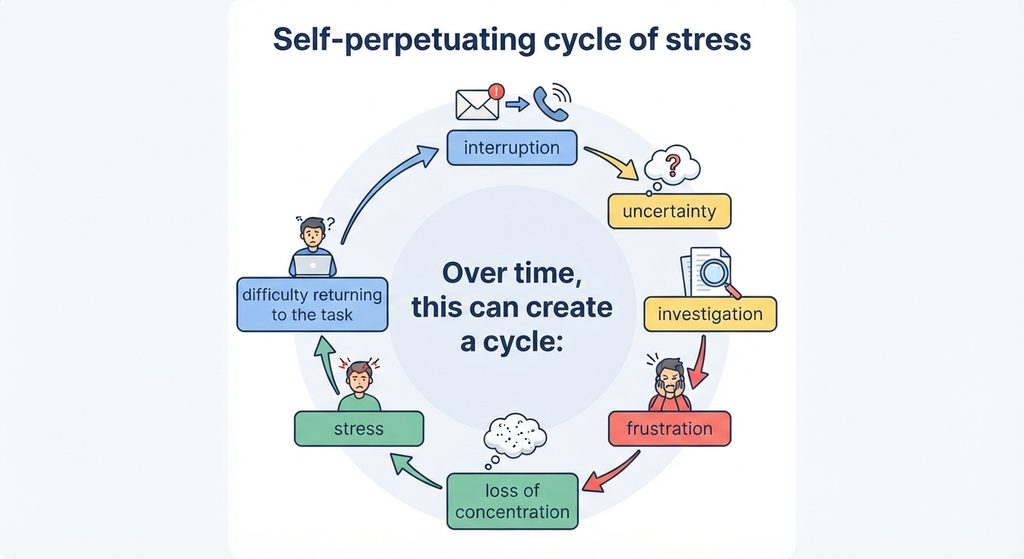
When the person’s career is already under pressure, the emotional response can become even stronger.
The appropriate response is therefore neither to dismiss the experience nor to immediately assume malicious intent. A better approach is to acknowledge the impact, document observable events, investigate proportionately, and avoid drawing conclusions that the available evidence cannot establish.
The objective is to protect both the person’s digital security and psychological bandwidth while keeping the focus on what can actually be verified.